Sofwave vs. Ultherapy: What the Research Actually Says
A new Sofwave study just reported nine-month results. Here is how it compares with the research on Ultherapy, written plainly by our physician-led team.
Ultherapy uses micro-focused ultrasound to lift brow, chin and neck skin. Dr. Robin Arora explains who it helps, how it feels and when you can expect results.

Ultherapy is one of the few skin tightening treatments with clearance from the FDA for lifting specific areas — the brow, the under-chin area and the neck — and for improving lines and wrinkles on the chest. It works entirely from the outside, with no needles or incisions, yet it reaches surprisingly deep.
Because results appear gradually, it’s a treatment where understanding the process ahead of time makes a real difference in how satisfied people feel. Here is what I explain to patients before they decide.
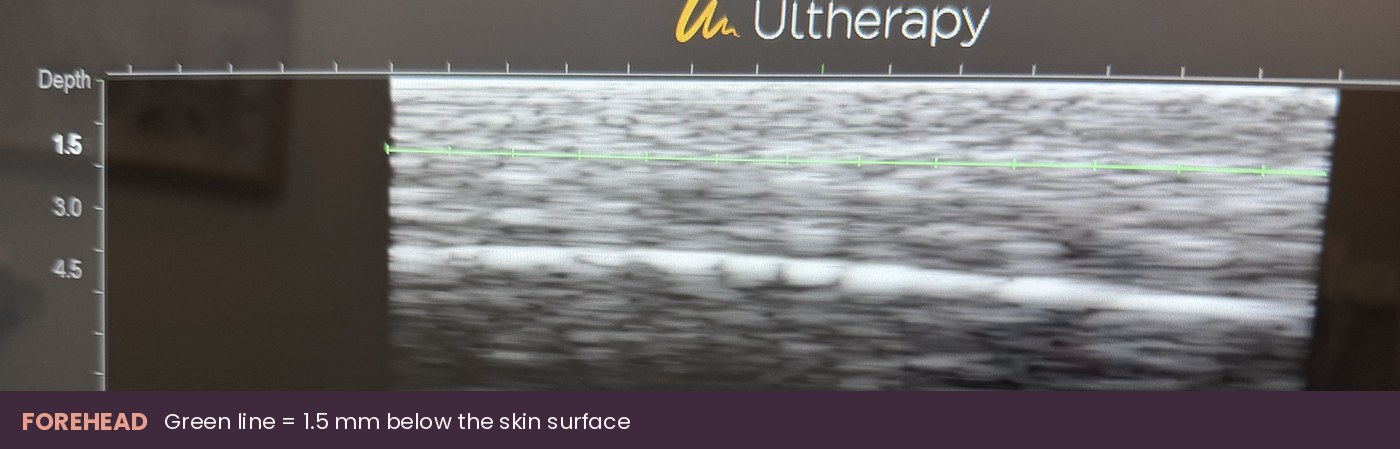
Most people know ultrasound as an imaging tool. Ultherapy uses it two ways. First, the provider uses real-time ultrasound imaging to see the layers of skin and tissue under the handpiece. Then the device focuses ultrasound energy into tiny points at set depths, heating each point enough to cause controlled collagen contraction and remodeling.
Different transducers reach different depths, including the superficial musculoaponeurotic system (SMAS), the supportive layer a surgeon tightens during a facelift. Treating at multiple depths lets us address both the deeper support and the skin itself.
The patients I find most satisfied usually share a few traits:
Some patients in their 30s and 40s use it to get ahead of early changes, while others in their 50s and 60s combine it with other treatments.
Side effects are usually mild: redness, swelling, tenderness and occasionally bruising or small raised welts that resolve. Less commonly, patients experience temporary numbness or nerve irritation. These risks are why treatment should be performed by trained medical professionals under physician oversight, as it is at Serene.
I won’t pretend Ultherapy is painless. Patients commonly describe a series of hot, prickly or deep aching pulses, most noticeable over bone, such as along the jawline. Sensations fade the moment each pulse ends.
We use several comfort strategies, which may include taking an over-the-counter pain reliever beforehand if your health allows, a pace that includes breaks, and adjusting the energy in sensitive zones. Most full-face-and-neck treatments take about an hour to ninety minutes.
Many patients repeat treatment every one to two years to maintain results. Taking photos before treatment helps, because gradual change is easy to miss in the mirror.
Ultrasound lifts, but it does not replace lost volume or relax expression lines. A balanced plan might include Botox and other FDA-approved neuromodulators for the brow, filler or a biostimulator for volume, and a skin-quality treatment for texture, all spaced appropriately.
Most people return to normal activities the same day. Mild redness, swelling or tenderness can last hours to a few days.
Most patients need one treatment, with maintenance every one to two years depending on their skin and aging.
Results usually become noticeable over two to three months, and improvement can continue for up to about six months.
No. It can lift and tighten mild to moderate laxity, but it does not remove excess skin the way surgery can.
If a heavier brow or a softening jawline is bothering you, let’s look together and discuss whether ultrasound, another option or a combination makes the most sense. Book a complimentary, no-commitment consultation:
Ask about Easy Pay financing.
References: Alam M, White LE, Martin N, et al. Ultrasound tightening of facial and neck skin: a rater-blinded prospective cohort study. Journal of the American Academy of Dermatology. 2010. · Fabi SG. Noninvasive skin tightening: focus on new ultrasound techniques. Clinical, Cosmetic and Investigational Dermatology. 2015. · U.S. Food and Drug Administration. 510(k) clearance database, Ulthera System. fda.gov
This article is for general information only and is not medical advice. Treatments are provided only after consultation and evaluation by a licensed provider. Individual results vary.

A new Sofwave study just reported nine-month results. Here is how it compares with the research on Ultherapy, written plainly by our physician-led team.
Big weight loss is a health win, but it can leave loose skin and a hollow face behind. Here’s what nonsurgical treatments can realistically improve, and what they can’t.
Thread lifts sit between injectables and surgery. They can lift and refresh, but only within limits. Here’s a clear-eyed look at what PDO threads really deliver.