
Loose Skin After Major Weight Loss: Realistic Nonsurgical Options
Big weight loss is a health win, but it can leave loose skin and a hollow face behind. Here’s what nonsurgical treatments can realistically improve, and what they can’t.
A physician-written, side-by-side look at Sofwave and Ultherapy: how each works, what the published studies show, comfort, downtime and who is a good candidate.
Patients often ask us whether they should choose Sofwave or Ultherapy to tighten a softening jawline, chin or neck. A new peer-reviewed Sofwave study published this fall makes it a good time to lay out what the research actually shows, in plain language. We offer Ultherapy at both of our offices, in Hudson, Ohio and Barboursville, West Virginia, and we'll explain why at the end. You can also watch Dr. Arora demonstrate an Ultherapy treatment live on WSAZ’s Studio 3 in the video on this page.
Both devices use ultrasound energy to gently heat tissue under the skin. Your body responds by building new collagen over the next two to three months, which firms and lifts the skin gradually. The main difference is depth:
Sofwave. The new study, published in Lasers in Surgery and Medicine, followed 42 Asian patients for nine months after a single treatment. Improvement under the chin and in the neck was seen in 83% of evaluable patients at three months, 71% at six months and 69% at nine months, and no burns, scarring or pigment changes were reported. These are encouraging results, especially for skin types where heat-related darkening is a concern. The study was small, had no comparison group, and the improvement eased somewhat between three and nine months.
Ultherapy. Ultherapy has been used for lifting since its first FDA clearance in 2009, and it has a much larger body of research. In published studies, roughly 7 in 10 patients had a visible lift under the chin or in the neck at three months, and 86% had a measurable brow lift at 90 days. A 2023 review of 16 studies found that 92% of patients were rated as improved at 90 days by their treating clinicians, with moderate improvement becoming more common by six months.1
The honest bottom line: the numbers land in a similar range, and the two devices have never been tested against each other in the same study. Anyone who tells you one is clearly superior is going beyond the evidence.
Neither treatment requires downtime; most people return to work the same day. Ultherapy is usually described as moderately uncomfortable, about 4 out of 10 on average in published studies, mostly over bony areas, and we adjust settings and use comfort measures as we go. Temporary redness is common with both, and mild swelling, tenderness or bruising can occur for a few days.
Both treatments work best for mild to moderate laxity: an early softening of the jawline, a little looseness under the chin, or crepey neck skin. They are not a substitute for surgery when skin is very loose or heavy. Results vary from person to person, and a healthy weight, sun protection and not smoking all help results last.
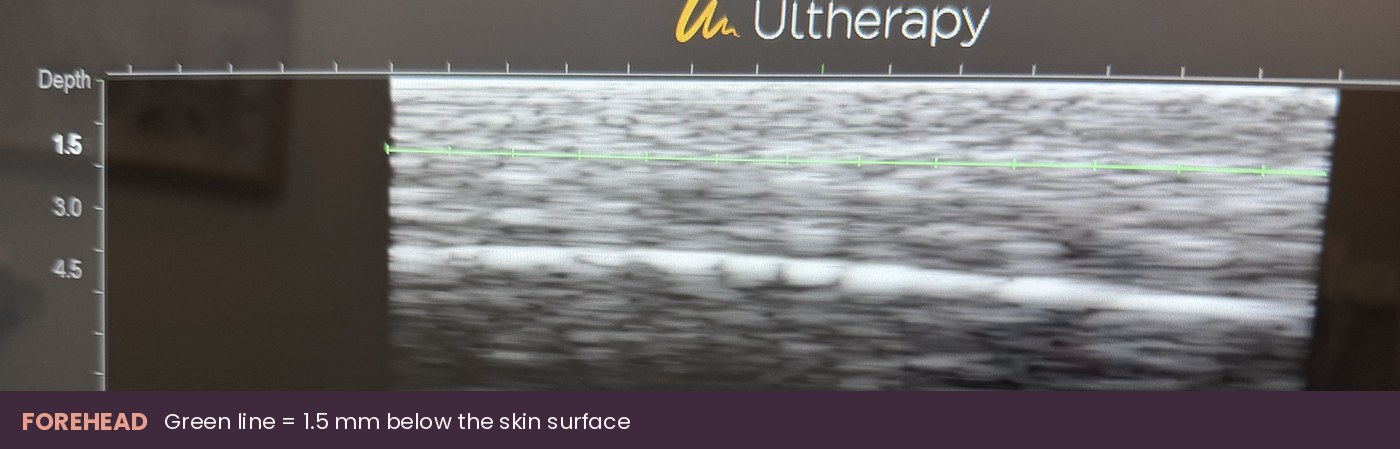
We chose Ultherapy because it can treat more than one depth, including the deeper support layer, and because seeing the tissue on screen lets our team tailor each treatment. Its long track record matters to us as physicians. Sofwave is a reasonable technology with promising new data, and we will keep watching the research as it grows.
Curious whether Ultherapy fits your goals? Book a complimentary consultation with our physician-led team in Hudson or Barboursville. New clients receive 20% off their first visit; it applies to any product or service and can't be combined with another discount. Book your consultation.
Sources: Sofwave study (Chan et al., Lasers in Surgery and Medicine, 2026); systematic review of microfocused ultrasound, 2023; review of deep-heating skin-tightening devices, J Drugs Dermatol; Sofwave FDA lifting indications.

Big weight loss is a health win, but it can leave loose skin and a hollow face behind. Here’s what nonsurgical treatments can realistically improve, and what they can’t.
Thread lifts sit between injectables and surgery. They can lift and refresh, but only within limits. Here’s a clear-eyed look at what PDO threads really deliver.
Jowls aren’t just sagging skin. Understanding the four things that cause them explains why some respond beautifully to nonsurgical care and others need a surgeon.