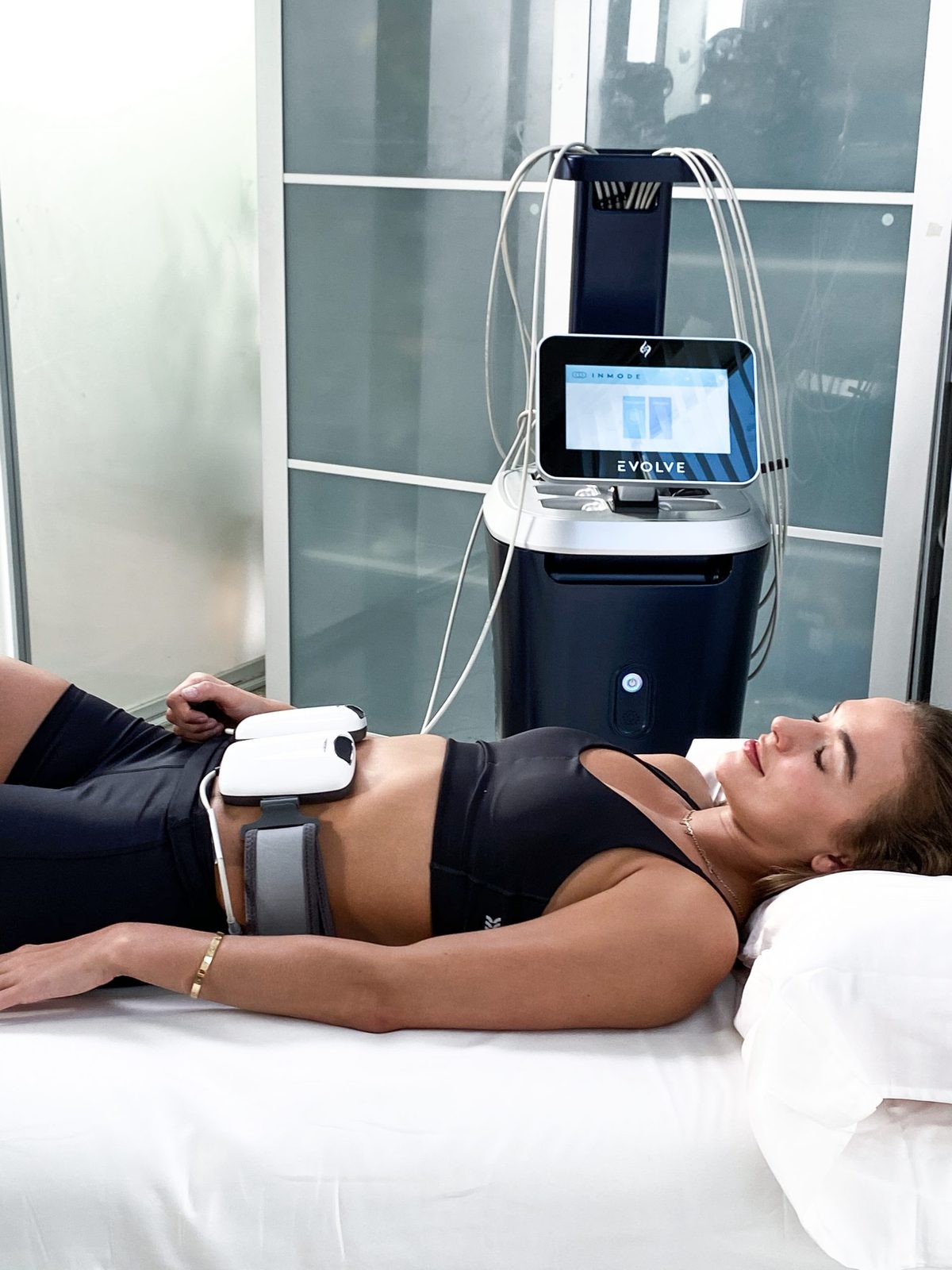
EvolveX Body Contouring in Hudson, OH: As Seen on WSAZ
Our team demonstrated EvolveX live on WSAZ. Here is how it works, why it is a strong fit after weight loss, and what it costs at our Hudson office near Akron and Cleveland.
Cellulite affects most women and has little to do with fitness. A physician explains why it forms and which treatments, from creams to devices, can help.

Let me start with some reassurance: cellulite is normal. Most adult women have some, including athletes, models and people who are very lean. It is a feature of how female connective tissue is built, not a verdict on your diet or discipline.
That said, many people would like smoother skin on their thighs and buttocks, and that’s a reasonable goal. Understanding the anatomy explains why so many products fail and why a few treatments can help. Here’s what I tell patients.
Under the skin, fat sits in compartments separated by bands of fibrous tissue called septae. These bands connect the skin to the deeper layers.
Other contributors include thinner skin over time, loss of collagen and elasticity, hormonal influences (estrogen plays a role), genetics, and changes in circulation and fluid in the tissue.
Losing weight can reduce the fat bulging between the bands, and for some people cellulite improves. But the tethering septae remain, and loose skin after significant weight loss can make dimples look more obvious. Cellulite occurs at every body size.
Topical products are more limited still. Caffeine creams may briefly tighten the look of skin, and retinoids used for months may slightly thicken the skin, but no cream releases the fibrous bands. Be skeptical of dramatic promises.
The most direct approach is to release the tethering bands. This can be done with a needle-based technique called subcision, or with devices designed for it. These approaches target the cause of individual dimples and can produce longer-lasting results, with the trade-off of bruising and some recovery time. This is something to discuss at a consultation to see whether a referral is appropriate.
Radiofrequency devices heat the deeper skin to stimulate collagen and firm the surface. Options such as Forma skin tightening and Morpheus8 radiofrequency microneedling can improve skin quality and texture over a series of sessions. They tend to soften the overall appearance rather than erase individual dimples.
Poly-L-lactic acid, the ingredient in Sculptra, can be placed in a diluted form to gradually build collagen, which may smooth mild depressions on the buttocks and thighs. It requires a series and patience, since changes appear over months.
Building the underlying muscle and reducing localized fat with EMSCULPT NEO (Hudson only) can improve the shape and firmness of the buttocks. It isn’t a cellulite treatment by itself, but better contour often makes skin texture less noticeable.
Tissue treatments aren’t for everyone. Pregnancy, active skin infection, bleeding disorders, uncontrolled diabetes, a history of keloids and some implanted devices may rule out certain options. Also, see a doctor if an area of dimpling appears suddenly, is painful, red or warm, or occurs with swelling in one leg; those are not typical cellulite and need medical evaluation.
No current treatment permanently eliminates cellulite. The goal is visible improvement, and most approaches need maintenance. In my experience, combining treatments that address skin quality, contour and tethering tends to produce the most satisfying results. Daily habits still matter: staying active, maintaining a stable weight, not smoking and protecting skin from sun damage all support skin quality.
Yes, but it is much less common because of the crisscross structure of connective tissue in male skin. It can appear with hormonal changes or significant weight fluctuations.
They may temporarily improve the look of skin by moving fluid, but effects are short-lived and don’t change the underlying bands.
It depends on the treatment. Energy-based devices usually require a series of sessions plus maintenance; collagen stimulators typically need two or more treatments spaced weeks apart.
No treatment stops the natural aging of skin and tissue. Results can last a long time with maintenance, but cellulite can gradually return.
Every body treatment at Serene is performed or supervised by trained medical professionals under my oversight. Book a complimentary, no-commitment consultation and we’ll assess your skin and design a realistic plan.
Ask about Easy Pay financing.
References: Nürnberger F, Müller G. So-called cellulite: an invented disease. Journal of Dermatologic Surgery and Oncology. 1978. · Rawlings AV. Cellulite and its treatment. International Journal of Cosmetic Science. 2006. · American Academy of Dermatology. Cellulite treatments: What really works? AAD. aad.org
This article is for general information only and is not medical advice. Treatments are provided only after consultation and evaluation by a licensed provider. Individual results vary.

Our team demonstrated EvolveX live on WSAZ. Here is how it works, why it is a strong fit after weight loss, and what it costs at our Hudson office near Akron and Cleveland.
Stephanie Welker, FNP-BC explained EvolveX live on WSAZ while Cami, our esthetician, was treated on air. Here is what they demonstrated, what a session feels like, and what it costs in Barboursville.
The right body contouring treatment depends on how much fat, how much loose skin and how much downtime you can accept. Here’s a side-by-side look at the options.