
Radiesse vs. Sculptra: Comparing Collagen Stimulators
Two of the best-known collagen stimulators work in different ways. Comparing Radiesse and Sculptra side by side makes it easier to understand which approach fits your goals.
Sculptra helps your skin build its own collagen over months. A physician explains how it works, typical sessions, the results timeline, aftercare, and risks.
If traditional filler is like adding furniture to a room, Sculptra is more like reinforcing the walls. It doesn’t produce an instant transformation, and patients who expect one can be disappointed at their first follow-up. But for the right person, the slow, gradual improvement it produces is exactly the appeal: friends notice you look better over a season, not overnight.
In this guide I’ll cover what Sculptra is, how it works in the skin, how many sessions most people need, what the timeline looks like, and who should consider something else.
Sculptra is made of poly-L-lactic acid (PLLA), a biocompatible, biodegradable material that has been used in medicine for decades, including in dissolvable stitches. It arrives as a powder and is mixed with sterile water before treatment. The FDA first approved it in 2004 to restore facial volume in people with HIV-associated fat loss, later approved it for cosmetic correction of facial wrinkles and folds, and more recently expanded its approval to include cheek wrinkles.
Sculptra falls into a category called biostimulators or collagen stimulators. Unlike hyaluronic acid filler, its main effect is not the gel itself but your body’s response to it.
After injection, the water carrying the PLLA is absorbed over the following days, so the initial fullness you see fades. The PLLA particles remain in the deeper layers and trigger a controlled response in which your tissue gradually produces new collagen around them. Over months, the PLLA itself is broken down and cleared, while the collagen your body built remains.
That’s why the results tend to look soft and natural: the volume is your own tissue, spread across a broad area rather than concentrated at a few injection points.
Every plan is individualized, but a typical course looks like this:
Areas commonly treated include the cheeks, temples, lower face, and jawline. Sculptra is also used on the body; if you’re curious about buttock contouring, see our Sculptra BBL page.
Because PLLA can clump if it settles unevenly, massaging the area after treatment is part of the protocol. Many injectors teach the “5-5-5” guideline: massage for about five minutes, five times a day, for five days. We’ll give you specific instructions, and our Sculptra aftercare page covers the details. Expect some swelling, tenderness, and possible bruising for several days.
Sculptra suits adults with gradual, widespread volume loss who are comfortable waiting for results and value a natural, low-key change. It pairs well with other treatments; for example, targeted cheek filler can give immediate structure while Sculptra builds broader support.
It is usually not the right choice if you:
Common side effects include swelling, tenderness, redness, and bruising. The best-known specific risk is the formation of small bumps, called papules or nodules, under the skin. Modern dilution and injection techniques have made these less common, but they can occur and may appear months later. As with any injectable, infection and vascular complications are possible, though rare. Sculptra at our practice is administered by trained medical professionals under my oversight.
It’s often grouped with fillers, but it works differently. Rather than filling directly, it stimulates your own collagen production over several months.
It depends on the degree of volume loss and the areas treated. We estimate at consultation and adjust as we see how you respond.
Yes. Many plans use HA filler for immediate definition at key points and Sculptra for gradual, broad support.
Most patients tolerate it well. Topical numbing and lidocaine mixed into the product help keep it comfortable.
If gradual, natural-looking improvement appeals to you, a complimentary, no-commitment consultation will help you decide whether Sculptra fits your goals and timeline.
Ask about Easy Pay financing.
References: Galderma. Sculptra Aesthetic (injectable poly-L-lactic acid) Instructions for Use. · Fitzgerald R, Vleggaar D. Facial Volume Restoration of the Aging Face with Poly-L-Lactic Acid. Dermatologic Therapy. 2011. · Vleggaar D, Fitzgerald R, Lorenc ZP. Understanding, Avoiding, and Treating Potential Adverse Events Following the Use of Injectable Poly-L-Lactic Acid for Facial and Nonfacial Volumization. Journal of Drugs in Dermatology. 2014.
This article is for general information only and is not medical advice. Treatments are provided only after consultation and evaluation by a licensed provider. Individual results vary.

Two of the best-known collagen stimulators work in different ways. Comparing Radiesse and Sculptra side by side makes it easier to understand which approach fits your goals.
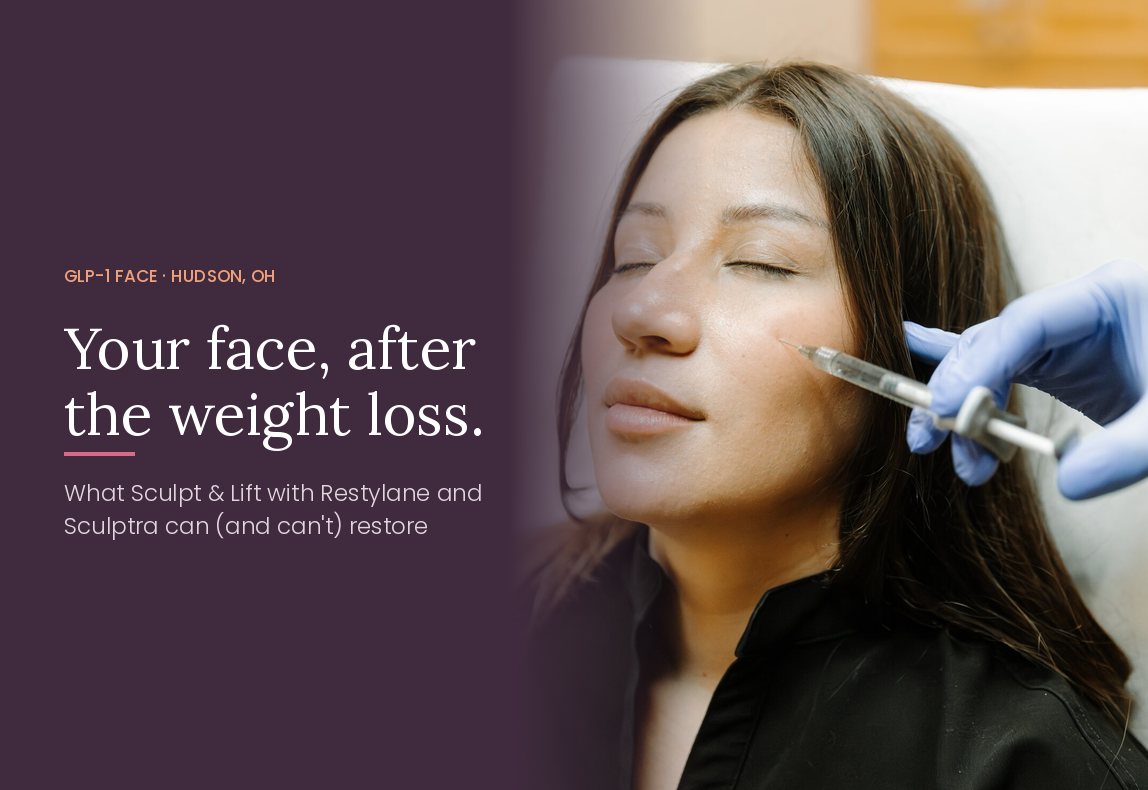
GLP-1 medications shrink the fat pads that hold the face up, so a healthier body can come with a more tired-looking face. Here’s what Galderma’s Sculpt & Lift regimen does, when to start, and what it costs in Hudson.
The most important filler conversation is not about brands or prices. It is about blood vessels, warning signs and whether your injector is ready if something goes wrong.