
Radiesse vs. Sculptra: Comparing Collagen Stimulators
Two of the best-known collagen stimulators work in different ways. Comparing Radiesse and Sculptra side by side makes it easier to understand which approach fits your goals.
Hyaluronic acid fillers add volume now; biostimulators like Sculptra build collagen over time. Dr. Arora compares results, longevity, reversibility and risks.
I often explain the two main filler families with a construction analogy. Hyaluronic acid filler is like adding a beam where support is missing: you see the change right away, and it can be removed if needed. A biostimulator is more like hiring a crew to rebuild the frame: the work happens gradually, the result is your own tissue, and there is no quick undo.
Both approaches have a place. Knowing how they differ helps you choose the one that matches your face, your timeline and your comfort with risk.
Hyaluronic acid occurs naturally in skin, where it binds water. Filler versions are cross-linked so they last months rather than days. Different HA products are engineered for different jobs: soft, flexible gels for lips and fine lines; firmer, more lifting gels for cheekbones, chin and jawline.
Biostimulators are designed to trigger your body’s own collagen production. The two best-known ingredients are:
Many faces benefit from both: a biostimulator to rebuild broad support and a small amount of HA, such as cheek filler, to refine a specific contour.
Both categories share the general risks of injectables: bruising, swelling, infection, lumps and, rarely, blood-vessel compromise. With a non-dissolvable product, prevention is even more important. At Serene, injections are performed by trained medical professionals under my oversight.
Treatment is postponed during pregnancy or breastfeeding, with an active skin infection, or with a history of keloids or certain autoimmune conditions until reviewed. After a biostimulator, follow our Sculptra aftercare instructions closely, including any recommended massage.
Sculptra results generally last longer than most HA fillers, but they take several months to fully develop.
No. There is no enzyme that dissolves PLLA or CaHA, which is why careful planning matters.
It is often a good fit for broad, age-related volume loss, but age alone does not decide. Your anatomy and goals do.
Yes. Combining a biostimulator for overall support with HA for detail is a common, effective strategy.
Choosing between filling and stimulating is easier with an exam and a conversation. Book a complimentary, no-commitment consultation at either location:
Ask about Easy Pay financing.
References: U.S. Food and Drug Administration. Dermal Fillers (Soft Tissue Fillers). FDA · Galderma. Sculptra Aesthetic (injectable poly-L-lactic acid) Instructions for Use. · Signorini M, et al. Global Aesthetics Consensus: Avoidance and Management of Complications from Hyaluronic Acid Fillers. Plastic and Reconstructive Surgery. 2016.
This article is for general information only and is not medical advice. Treatments are provided only after consultation and evaluation by a licensed provider. Individual results vary.

Two of the best-known collagen stimulators work in different ways. Comparing Radiesse and Sculptra side by side makes it easier to understand which approach fits your goals.
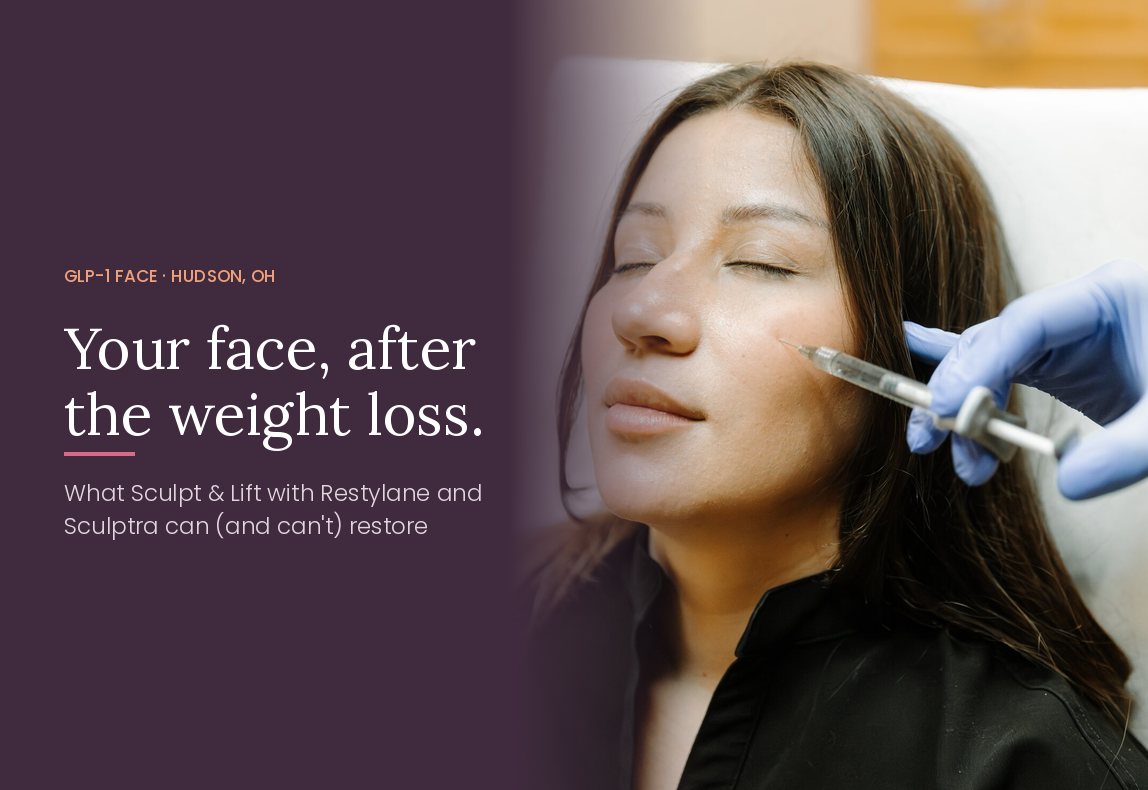
GLP-1 medications shrink the fat pads that hold the face up, so a healthier body can come with a more tired-looking face. Here’s what Galderma’s Sculpt & Lift regimen does, when to start, and what it costs in Hudson.
The most important filler conversation is not about brands or prices. It is about blood vessels, warning signs and whether your injector is ready if something goes wrong.