
Radiesse vs. Sculptra: Comparing Collagen Stimulators
Two of the best-known collagen stimulators work in different ways. Comparing Radiesse and Sculptra side by side makes it easier to understand which approach fits your goals.
Needle-free hyaluron pens are sold for DIY lip and face filling, but the FDA has warned against them. A physician explains the risks and safer alternatives.
They show up in social media ads and short videos: a small device, often shaped like a pen, pressed against the lips with a click. The promise is fuller lips or smoother lines with “no needles,” no appointment, and a fraction of the cost. Some are sold directly to consumers for home use, and some are offered at pop-up events or by people without medical training.
I understand the appeal. But as a physician, I recommend avoiding these devices entirely, and the U.S. Food and Drug Administration has publicly warned against them. In this post I’ll explain how hyaluron pens work, what can go wrong, and what to do if you’ve already used one.
A hyaluron pen is a needle-free injector. Instead of a needle, it uses pressure, usually from a spring or gas, to push a small jet of liquid through the skin. The liquid is often described as hyaluronic acid (HA) filler, but products bought online may be unapproved, mislabeled, or of unknown origin and sterility.
Needle-free injection technology has legitimate uses in medicine, such as delivering some vaccines and medications. The problem is using this kind of device to place dermal filler, a gel that needs to be positioned at a specific depth, in a specific plane, and in a controlled amount.
In 2021, the FDA issued a safety communication advising the public not to use needle-free devices to inject hyaluronic acid or other dermal fillers into the face or lips. The agency noted that these devices are not FDA-approved or cleared for this use, and it described reports of serious injuries.
The concerns fall into a few groups.
With a syringe, a trained injector chooses the depth, angle, and amount of each deposit and can aspirate or adjust in real time. A pressure jet simply fires. The filler can scatter unevenly through tissue or end up in the wrong layer, which can cause lumps, bumps, and asymmetry that are difficult to correct.
Every filler injection carries a small risk of filler entering or compressing a blood vessel, which can cut off blood supply to the skin. The lips and the area around the nose are especially sensitive. A needle-free jet is still forceful enough to penetrate tissue, but the person using it has no way to see or feel where the product is going. Consequences can include skin injury, tissue death, scarring, and, in rare cases involving facial filler, vision loss.
FDA-approved fillers are manufactured under strict quality controls. Products sold for pens online may contain unknown ingredients, be contaminated, or be something other than what the label says. If the material isn’t HA, it may not respond to hyaluronidase, the enzyme we use to dissolve HA filler in an emergency.
Devices used at parties or pop-ups may be shared between people, and home users may not know how to prepare skin or handle products in a sterile way. That raises the risk of infection and of spreading bloodborne or skin infections.
If you had a hyaluron pen treatment and feel fine, keep an eye on the area and consider an evaluation if anything changes. Seek care right away if you notice:
Bring any packaging or product information you have. Knowing what was injected helps the treating clinician decide what to do.
If you want fuller lips or smoother lines, the safer path is an FDA-approved filler placed by a trained medical professional who knows facial anatomy and can manage complications. At Serene Med Spa, lip filler and other dermal fillers are performed by trained medical professionals under my oversight, and we keep hyaluronidase on hand.
If you are nervous about needles, tell us. Topical numbing, lidocaine-containing products, and blunt-tipped cannulas for some areas make treatment more comfortable than many people expect. And if your goal is skin hydration rather than volume, a treatment like SkinVive may be worth discussing.
No. The FDA has stated that needle-free devices are not approved or cleared for injecting hyaluronic acid or other dermal fillers, and it has advised the public not to use them for this purpose.
No. The jet still penetrates the skin, but with far less control over where the filler goes. Needle-free does not mean risk-free.
If the product was true hyaluronic acid, it can often be dissolved with hyaluronidase. If the product is unknown or not HA, dissolving may not work, which is one more reason to avoid these devices.
Often, yes, but it depends on what was injected and where. An in-person evaluation is the first step.
Whether you’re considering lip enhancement for the first time or dealing with results from a pen treatment, we offer a complimentary, no-commitment consultation to review your options safely.
Ask about Easy Pay financing.
References: U.S. Food and Drug Administration. Safety Communication: Do Not Use Needle-Free Devices for Injection of Hyaluronic Acid or Other Dermal Fillers. 2021. FDA. · Signorini M, Liew S, Sundaram H, et al. Global Aesthetics Consensus: Avoidance and Management of Complications from Hyaluronic Acid Fillers. Plastic and Reconstructive Surgery. 2016. · DeLorenzi C. Complications of Injectable Fillers, Part 2: Vascular Complications. Aesthetic Surgery Journal. 2014.
This article is for general information only and is not medical advice. Treatments are provided only after consultation and evaluation by a licensed provider. Individual results vary.

Two of the best-known collagen stimulators work in different ways. Comparing Radiesse and Sculptra side by side makes it easier to understand which approach fits your goals.
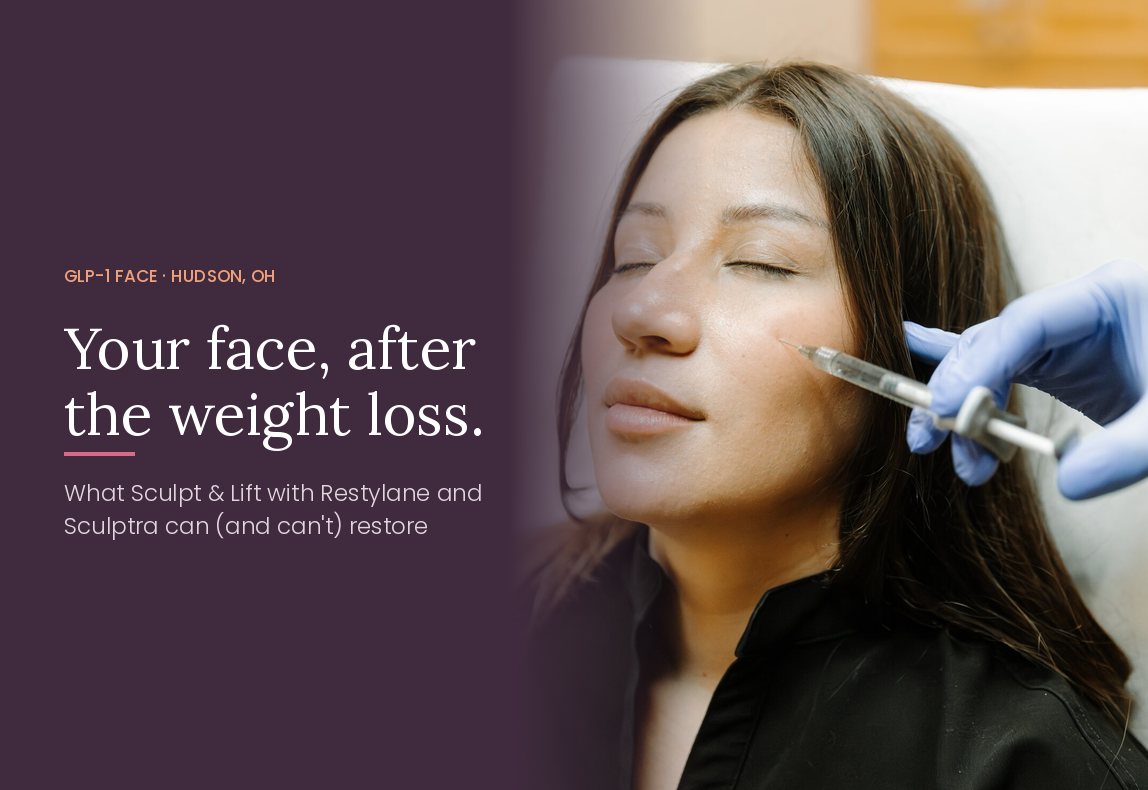
GLP-1 medications shrink the fat pads that hold the face up, so a healthier body can come with a more tired-looking face. Here’s what Galderma’s Sculpt & Lift regimen does, when to start, and what it costs in Hudson.
The most important filler conversation is not about brands or prices. It is about blood vessels, warning signs and whether your injector is ready if something goes wrong.