
Radiesse vs. Sculptra: Comparing Collagen Stimulators
Two of the best-known collagen stimulators work in different ways. Comparing Radiesse and Sculptra side by side makes it easier to understand which approach fits your goals.
Why bruising happens after filler and injectables, what to avoid beforehand, how to speed healing, and the warning signs that are not an ordinary bruise.
“Will I bruise?” is one of the most common questions I hear before an injectable appointment, usually followed by a date: a wedding, a work presentation, a family photo. The truthful answer is that any injection can bruise, even with excellent technique. The good news is that you have a fair amount of influence over the odds, and there are sensible ways to help a bruise fade faster.
Here is what I tell patients about planning, preparation, and aftercare, plus the signs that mean something other than a simple bruise.
A bruise forms when a needle or cannula nicks a tiny blood vessel under the skin and a small amount of blood leaks into the surrounding tissue. The face has a rich blood supply, and some areas bruise more easily than others. In my experience, the lips, the under-eye area, and the area around the mouth tend to bruise more than the forehead or jaw.
Your individual risk depends on several factors:
With your prescribing doctor’s approval where needed, these steps can reduce bruising:
Technique matters. Depending on the area, our trained medical professionals, working under my oversight, may use a blunt-tipped cannula, which tends to push vessels aside rather than pierce them, and which in some studies and in clinical experience is associated with less bruising. We also use good lighting to see superficial veins, apply firm pressure promptly if a vessel bleeds, and may apply cold before and after injections.
For area-specific tips, see our dermal filler aftercare and Botox aftercare pages. For stubborn bruises that linger, some practices use vascular lasers or light devices to speed fading; ask us whether a treatment like a photofacial would be appropriate in your situation.
This is the most important section. A bruise is usually a darker patch that doesn’t spread quickly and becomes less tender each day. Call us right away, day or night, if you notice:
These can be signs that filler is affecting blood flow, and prompt treatment matters. Also contact us if the area becomes hot, red, and increasingly swollen, which could suggest infection.
Yes, though usually less than filler because the needles are tiny and the injections are shallow. Small pinpoint bruises around the eyes are the most common.
Some patients feel it helps, but studies have shown mixed results. It’s generally safe to try topically, but it isn’t a substitute for avoiding blood-thinning supplements and alcohol.
Only if it was not prescribed for a medical reason, and ideally after checking with your doctor. Never stop aspirin prescribed for your heart or stroke prevention for a cosmetic treatment.
Usually after about 24 hours, once injection points have closed. Use clean brushes and fresh products.
If you have an event coming up, we can help you time your treatment and minimize downtime. Start with a complimentary, no-commitment consultation and bring a list of your medications and supplements.
Ask about Easy Pay financing.
References: Signorini M, Liew S, Sundaram H, et al. Global Aesthetics Consensus: Avoidance and Management of Complications from Hyaluronic Acid Fillers. Plastic and Reconstructive Surgery. 2016. · DeLorenzi C. Complications of Injectable Fillers, Part 2: Vascular Complications. Aesthetic Surgery Journal. 2014. · American Academy of Dermatology. Fillers: Overview and FAQs. AAD.
This article is for general information only and is not medical advice. Treatments are provided only after consultation and evaluation by a licensed provider. Individual results vary.

Two of the best-known collagen stimulators work in different ways. Comparing Radiesse and Sculptra side by side makes it easier to understand which approach fits your goals.
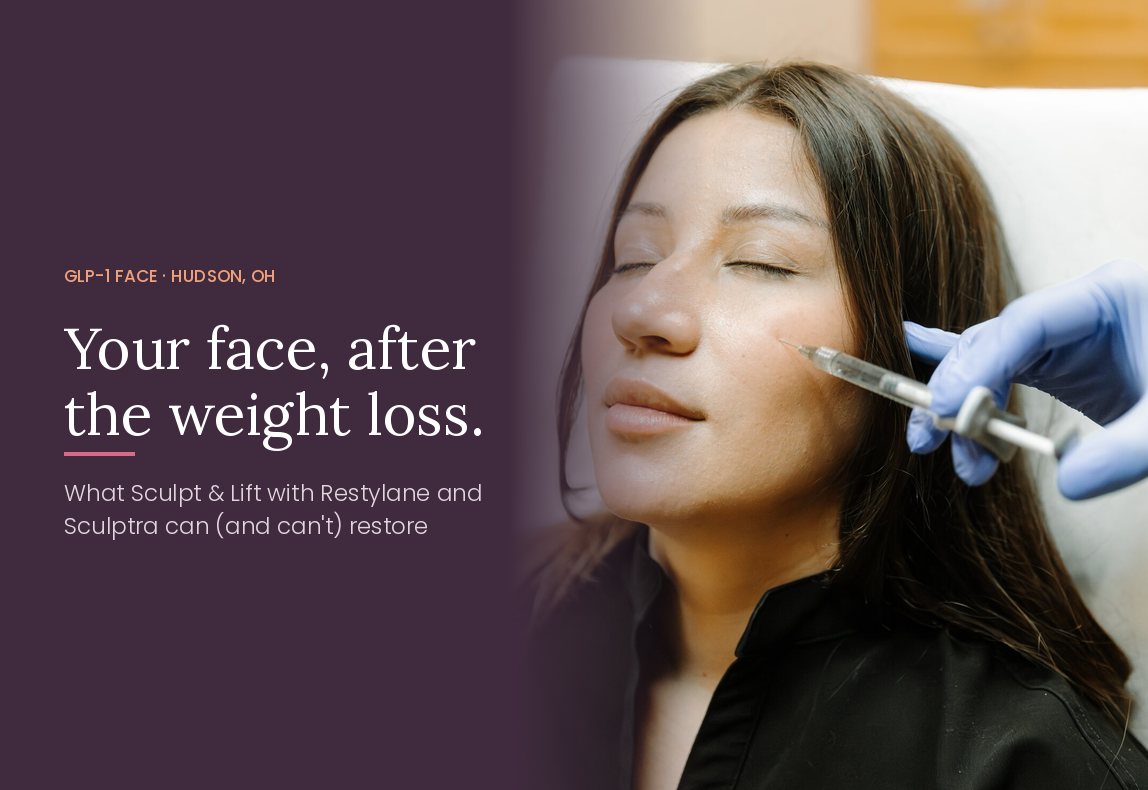
GLP-1 medications shrink the fat pads that hold the face up, so a healthier body can come with a more tired-looking face. Here’s what Galderma’s Sculpt & Lift regimen does, when to start, and what it costs in Hudson.
The most important filler conversation is not about brands or prices. It is about blood vessels, warning signs and whether your injector is ready if something goes wrong.